Thailand Dental Implant Services Helping Overseas Patients Achieve Better Smiles
Thailand Dental Implant Services Helping Overseas Patients Achieve Better Smiles
Sawasdee and welcome to the Land of Smiles—where high-tech dentistry meets warm Thai hospitality. Thailand’s dental implant services have become a trusted choice for overseas patients who want reliable care, transparent pricing, and a smooth experience from consultation to aftercare. Whether you’re based in the Middle East, Australia, Europe, or the US, many patients find that dental implants in Thailand deliver good value and predictable outcomes without compromising on quality.
Why so many international patients choose Thailand for dental implants
- Advanced training: Many Thai implant dentists hold postgraduate qualifications and fellowships from the UK, US, Australia, or Japan, and regularly place implants for expats and visitors.
- Modern technology: Clinics in Bangkok, Phuket, Chiang Mai, and Pattaya commonly use CBCT 3D scans, digital smile design, CAD/CAM milling, and computer-guided surgery, helping improve precision and comfort.
- Strong safety standards: Leading hospitals and clinics follow strict sterilisation protocols and may carry international accreditations such as JCI or ISO, with documented infection control and traceability for implant components.
- Competitive pricing: Thanks to lower operating costs, Thailand offers savings of 40–70% compared with many Western countries, with itemised quotes and flexible scheduling.
- Friendly service: English-speaking coordinators, prompt replies on email, Line, or WhatsApp, and a “no worries” approach make logistics easy for overseas travellers.
What to expect: a simple step-by-step journey
1) Online assessment and quotation
- Many clinics can review your panoramic X-ray or CBCT before you fly.
- You’ll receive a preliminary plan with options (implant brand, abutment type, crown materials) and a range of costs, plus estimated timelines.
2) In-clinic consultation and planning
- On arrival, the dentist will do a full oral exam, take or confirm a CBCT scan, and discuss medical history.
- You’ll agree on a customised plan, including any bone graft or sinus lift if needed. Digital planning is used to determine ideal implant position and angulation.
3) Implant placement
- Performed under local anaesthesia, with IV sedation available for anxious patients.
- A guided surgical template may be used to improve precision.
- Treatment time for a single implant surgery is often around 45–90 minutes.
- In suitable cases, a temporary tooth can be placed on the same day; otherwise, a healing cap is used.
4) Healing and osseointegration
- Bone integration typically takes 3–6 months, depending on bone quality and whether grafting was done.
- During this period, you’ll be advised to avoid very hard foods on the implant site and to follow a gentle home-care routine.
5) Final restoration
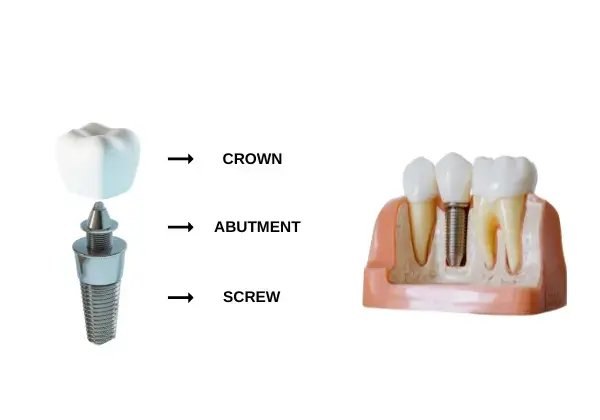
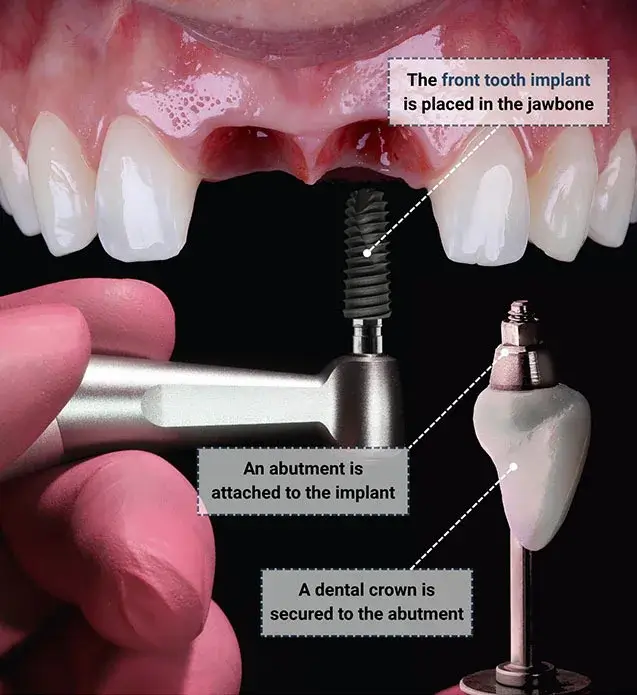
- After healing, the abutment is fitted and a custom crown (e.g., zirconia or porcelain-fused-to-metal) is made.
- If you can’t stay for the full healing period, most patients return for a shorter second trip to complete the crown.
Common solutions available in Thailand
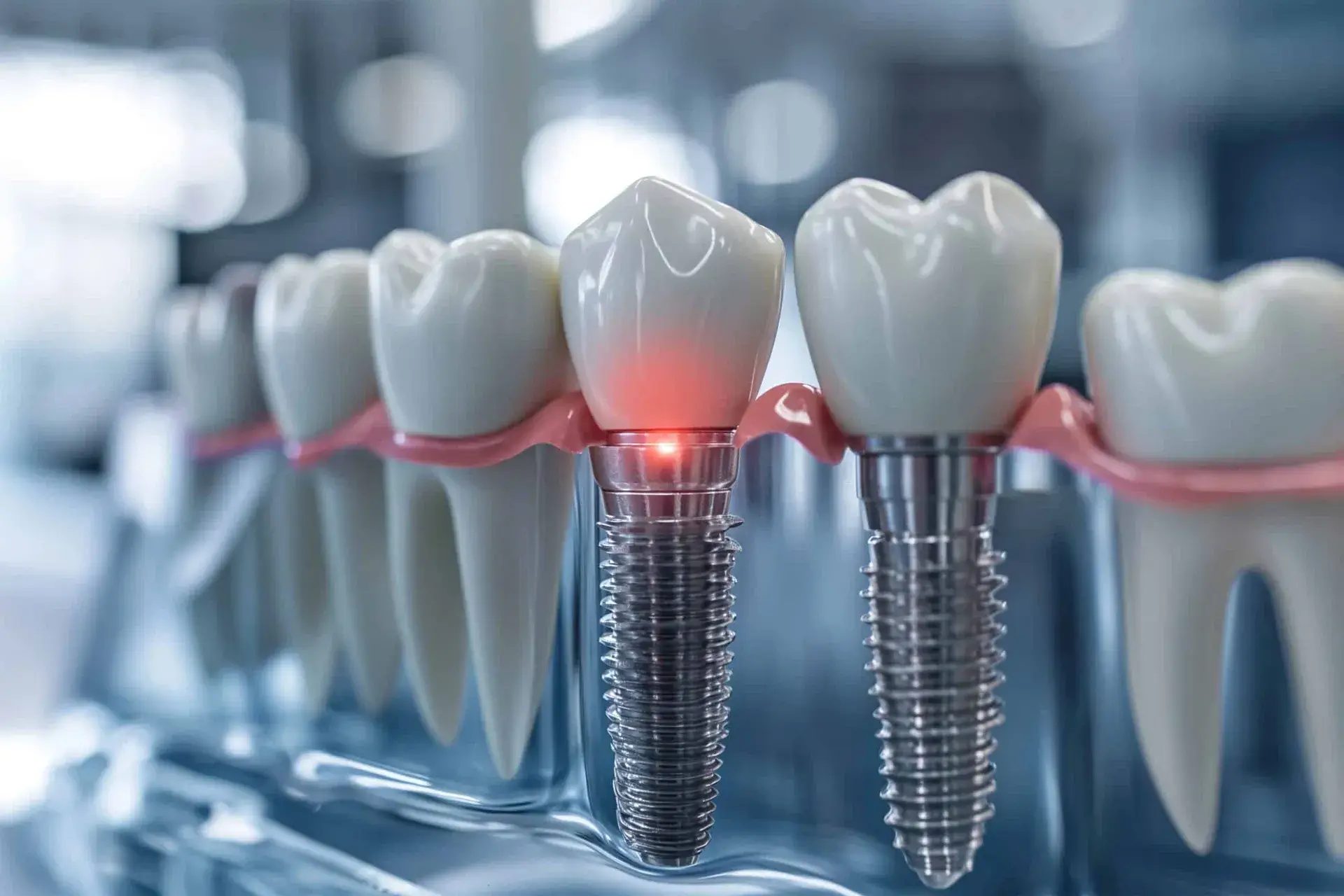
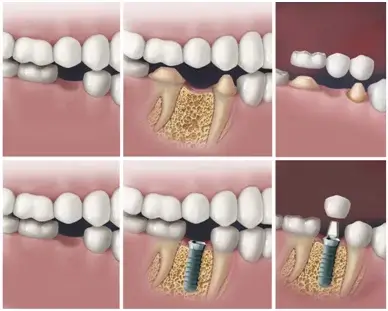
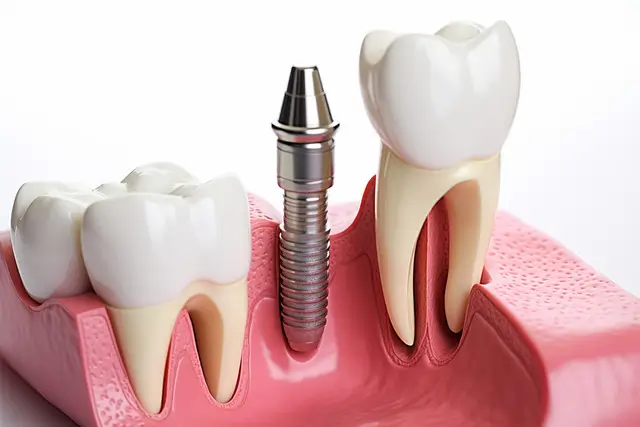
- Single-tooth implant: Replaces one missing tooth with a titanium implant, abutment, and crown.
- Multiple-tooth implants or bridge on implants: For gaps of two or more teeth without compromising adjacent natural teeth.
- Full-arch solutions (All-on-4 / All-on-6): A fixed full-arch bridge supported by four to six implants, suitable for many patients with extensive tooth loss.
- Bone grafting and sinus lift: Performed when there isn’t enough bone height or density, using high-quality graft materials and membranes.
Safety, materials, and warranties you can ask about
- Implant systems: Reputable clinics typically offer
global brands such as Straumann, Nobel Biocare, or Astra Tech, ensuring long-term component availability worldwide.
- Sterilisation: Ask about autoclave records, single-use disposables, and surface disinfection protocols. Good clinics will be transparent.
- Warranty policies: Many providers offer warranties on implants (often 3–10 years on the fixture, terms apply) and on the prosthetic work. Clarify coverage for breakage or complications, and what happens if you are back home.
Transparent costs and value for money
While exact fees vary by clinic, brand, and case complexity, typical figures for Thailand are:
- Single implant package (implant + abutment + crown): Around 50,000–90,000 THB per tooth.
- Bone graft or sinus lift (if needed): Additional 10,000–50,000 THB depending on extent and materials.
- Full-arch fixed bridge (All-on-4 / All-on-6): Often from 280,000–500,000 THB per arch, with provisional and final bridge stages.
These ranges are provided as a guide; your final quote will be based on scans and clinical findings. Many clinics can offer payment in stages aligned with treatment milestones.
Travel planning tips for overseas patients
- Timing your trip: For a single implant, you’ll usually need a short first visit for surgery (1–3 days) and a second visit after 3–6 months for the crown. Some clinics can coordinate accelerated protocols for immediate loading in selected cases.
- Visas and stay: Many nationalities enjoy visa-exempt entry for 30–60 days. Always check current rules and your passport validity.
- Accommodation and transport: Clinics close to BTS/MRT in Bangkok or central areas in Phuket/Chiang Mai make follow-up easy. Some providers offer airport pick-up or hotel recommendations.
- Eating and lifestyle: After surgery, stick to soft foods and room-temperature meals. Avoid very spicy or crunchy items for a few days and follow your dentist’s oral rinse instructions. No smoking helps healing.
- Insurance and documents: Keep your medical records, radiographs, and receipts in order. If you have a condition like diabetes or are on blood thinners, inform the clinic early so they can coordinate with your physician.
How to choose the right Thai dental clinic
- Check credentials: Look for implantology certifications, membership in reputable dental associations, and years of experience placing implants.
- Review technology: Clinics using CBCT planning, guided surgery, and in-house CAD/CAM labs often provide efficient workflows and precise results.
- Read reviews and case galleries: Patient testimonials and before-and-after photos give insight into communication, comfort, and outcomes.
- Ask for an itemised plan: A clear breakdown of implant brand, abutment type, crown material, and any grafting fees helps you compare fairly.
- Confirm follow-up support: Ensure they offer remote check-ins by video, clear aftercare instructions, and coordination with your local dentist if needed.
A friendly note on expectations
Even with top care, implant dentistry is still medical treatment—success depends on bone quality, oral hygiene, and overall health. Follow your dentist’s guidance closely, attend check-ups, and keep gums healthy for long-term success.
Ready for a confident smile?
From Bangkok’s sleek clinics to Phuket’s coastal practices, Thailand’s dental implant services combine skill, safety, and service in a way that feels both professional and approachable. With careful planning, transparent communication, and a bit of Thai “mai pen rai” spirit—no worries—you can return home with a stronger bite and a brighter smile. Khob khun krub/ka for reading, and we wish you a smooth journey to better oral health.