Why Thailand Dental Implants Are an Option for Affordable Smile Transformation
Why Thailand Dental Implants Are an Option for Affordable Smile Transformation
If you’ve been putting off implants because of the price back home, Thailand offers a practical path to a confident smile without compromising quality. This isn’t just about pairing a beach holiday with a dental visit. It’s about world-class clinicians, modern technology, and sensible pricing—wrapped in the warm, “mai pen rai” hospitality Thailand is known for.
Why Thailand stands out for dental implants
1) Meaningful savings without cutting corners
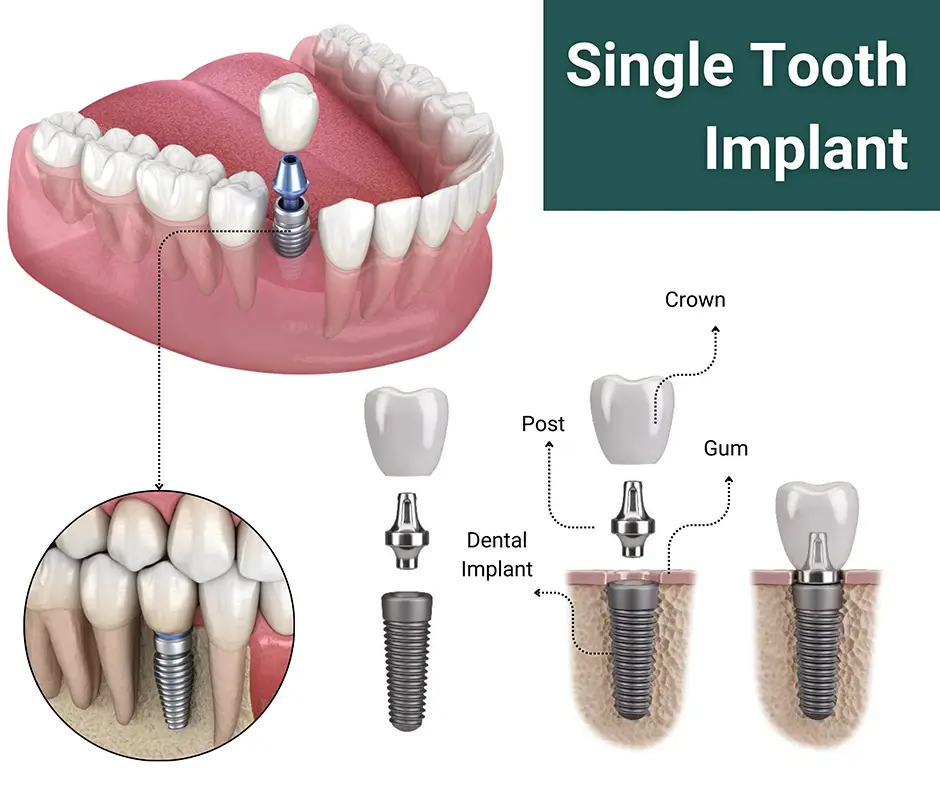
- In Thailand, a single dental implant with abutment and crown typically ranges from THB 45,000–80,000 (about USD 1,300–2,200), depending on brand, tooth position, and whether bone grafting is needed.
- Full-arch solutions such as All-on-4 or All-on-6 often start from around THB 220,000–380,000 per arch (USD 6,000–11,000), with variations for material (acrylic vs. zirconia) and complexity.
- Even after flights and accommodation, many patients see 40–70% savings compared to the US, Australia, or the UK.
2) Strong clinical standards and technology
- Many clinics in Bangkok, Chiang Mai, and Phuket use global implant systems like Straumann, Nobel Biocare, or MIS.
- Digital planning with CBCT 3D scans and guided surgery is common, improving precision and healing.
- Major hospitals and clinics often follow international protocols; some are JCI-accredited or partner with ISO-certified dental labs.
3) Experienced, English-speaking teams
- Thailand sees thousands of international dental patients each year. Clinics usually have English-speaking coordinators and dentists familiar with overseas case management.
- You’ll find clear treatment plans, transparent pricing, and support via email, Line, or WhatsApp—before and after you travel.
4) Seamless service and Thai hospitality
- From airport pick-ups to hotel links near clinics in Sukhumvit, Silom, or Nimman, it’s easy to keep the experience “sabai-sabai” (comfortable).
- Seasonal promotions and package pricing are common—just make sure you understand exactly what’s included.
How the implant journey usually works in Thailand
Before your trip
- Virtual consultation: Share your dental history, X-rays, and photos for a preliminary plan and ballpark quote.
- Firm up the itinerary: Many patients schedule 5–10 days for the first visit and 3–5 days for the second.
Visit 1: Implant placement (3–7 days)
- Day 1: In-person exam, CBCT scan, and final treatment plan. You’ll discuss implant brand, materials, and any need for bone grafting or a sinus lift.
- Day 2–3: Surgery day. Most clinics offer local anaesthesia; IV sedation is available at many centres for an extra fee. If needed, a temporary tooth/bridge is placed for aesthetics.
- Days 3–7: Short recovery, review, and instructions. Expect mild swelling for 2–3 days. Many travellers feel comfortable sightseeing at a relaxed pace after the first 48 hours.
Healing phase at home (3–6 months)
- Osseointegration—the implant fusing to bone—takes time. Your dentist may arrange online check-ins. Avoid smoking and follow the care instructions to support healing.
Visit 2: Final teeth (3–5 days)
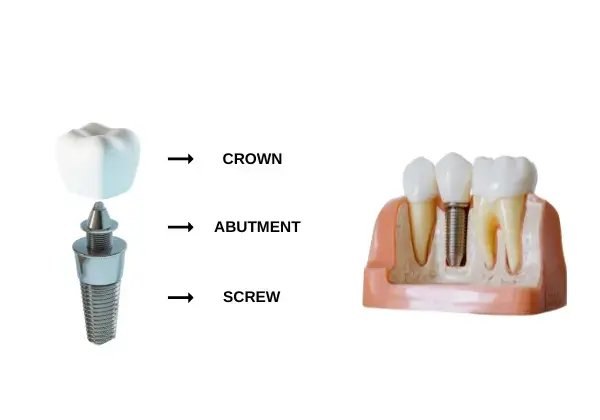
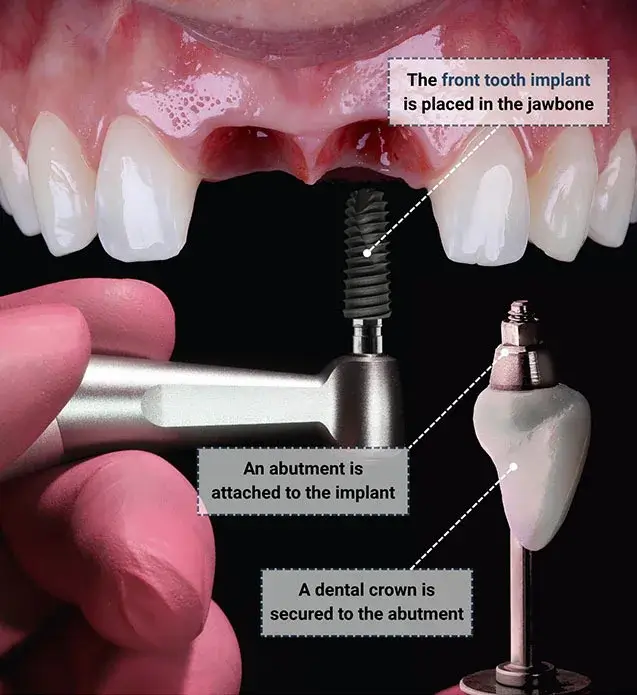
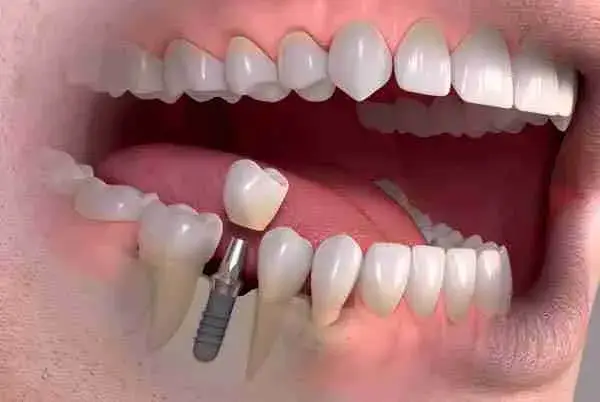
- The dentist attaches the abutment and takes a digital scan for your final crown or full-arch bridge.
- You’ll choose materials such as zirconia or porcelain-fused-to-metal based on aesthetics, durability, and budget.
- Final fit and bite adjustments are done before you fly home.
Note: Immediate-load options (like “teeth in a day” or All-on-4 with a fixed provisional
bridge) are available for suitable cases. Your dentist will advise if you’re a candidate.
What influences the total cost
- Complexity: Bone grafting or sinus lifts add to the fee and time.
- Materials: Premium implant brands and zirconia restorations cost more but may offer better long-term value.
- Anaesthesia: IV sedation or general anaesthesia is extra.
- Inclusions: Some packages cover X-rays/CBCT, medication, follow-ups, and temporary teeth; others quote these separately.
- Warranty: Reputable clinics provide a written warranty (often 1–5 years on components) and clear policies on what’s covered.
How to choose a reputable clinic in Thailand
- Qualifications: Look for dentists with DDS plus postgraduate training (e.g., MSc in Implant Dentistry), and memberships in professional bodies (ITI, AAID). Thai Dental Council licensure is standard.
- Technology and hygiene: On-site CBCT, digital impression systems, and documented sterilisation protocols are good signs.
- Implant systems: Confirm the brand and component availability for long-term maintenance in your home country.
- Transparent quotation: Ask for a line-by-line treatment plan, including possible add-ons. Beware of “cheap-cheap” ads that skip key items.
- Aftercare and communication: Check how follow-ups are handled once you return home and whether teleconsults are available.
- Reviews and case photos: Look for verified patient feedback and before/after images that match your case type.
Who is a good candidate for implants
- Healthy gums and sufficient bone support are essential. Smokers, uncontrolled diabetics, or those with certain medical conditions may need special care or may not be suitable.
- If you grind your teeth, ask about night guards to protect your new restorations.
- Bring a full medical history and medication list; some clinics will request medical clearance.
Practical recovery tips while in Thailand
- Keep it soft: Think khao tom (rice porridge), smoothies, soft eggs, and gentle soups for a few days.
- Oral care: Rinse with prescribed mouthwash, brush carefully, and avoid vigorous spitting or straw use right after surgery.
- Activity: Light sightseeing is fine after the first couple of days, but skip Muay Thai, diving, or heavy gym sessions until your dentist gives the all-clear.
- Comfort: Swelling peaks around day two; use cold compresses and take medications as directed.
- Lifestyle: Avoid smoking and alcohol during early healing to reduce the risk of complications.
Travel and timing considerations
- Flights are frequent into Bangkok (BKK/DMK), Phuket (HKT), and Chiang Mai (CNX), with many short-haul connections across Asia-Pacific.
- Visa-on-arrival or visa-free entry applies to many nationalities; check current requirements.
- Aim to arrive a day or two before surgery to settle in. Book flexible tickets in case your dentist recommends an extra day for review.
- Consider travel insurance that covers medical trip changes.
Is it worth it?
For many patients, Thailand delivers the sweet spot: skilled clinicians, advanced tech, and prices that make a life-changing smile reachable. You’ll still need to do your homework—compare clinics, ask detailed questions, and prioritise quality over rock-bottom deals. But with a clear plan and the right team, Thailand dental implants can be a smart, affordable way to restore your bite, your confidence, and your smile—all with a touch of “sabai-sabai” along the way.